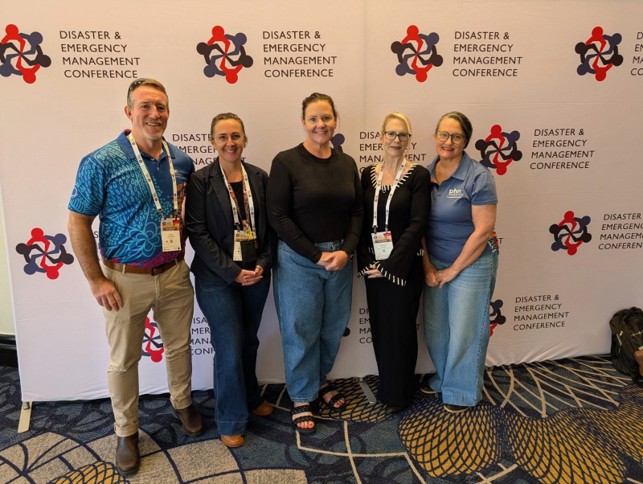
Since stepping into the Disaster Management Coordinator role at WQPHN in March, Cherilyn Bickers has focused on building relationships and ensuring primary healthcare is represented in disaster and emergency planning across Western Queensland. Communities across the region know the challenges that floods, fires, extreme heat and isolation can bring. The Disaster Management Coordinator role helps connect the people, information and planning needed to support continued access to healthcare when these disruptions occur.
In July, Cherilyn attended the Disaster & Emergency Management Conference on the Gold Coast, joining colleagues from other Primary Health Networks to share experiences and discuss how to strengthen primary healthcare’s contribution to disaster preparedness, response and recovery. She also connected with local government representatives, emergency services and other disaster and emergency management stakeholders from across Australia. These relationships are an important part of her work: knowing who to contact, understanding each other’s roles and building connections before they are needed during an emergency.
A voice for primary healthcare
WQPHN is now embedded in the Queensland Disaster Management Arrangements through its advisory and coordination role with Local and District Disaster Management Groups. This means ensuring the needs of primary healthcare providers and their communities are part of disaster management discussions. WQPHN’s role spans its broad network of healthcare providers, commissioned service providers and partner organisations, bringing their diverse perspectives into disaster planning and strengthening collective preparedness and continuity of services across Western Queensland.
A key part of this role is two-way information sharing across WQPHN’s network of service providers, partner organisations and disaster management stakeholders. WQPHN draws on these connections to understand local conditions, service disruptions and emerging concerns, and brings these insights into disaster management discussions. It also shares relevant information across the network to support coordinated planning and informed decisions about staff, services and the people and communities they support.
Cherilyn is continuing to build these relationships across WQPHN’s diverse network of service providers, government and non-government organisations, community groups and disaster management partners throughout Western Queensland. These connections help bring a broad range of perspectives into disaster management discussions, strengthen understanding of local priorities and inform WQPHN’s advocacy for providers and communities.
What support looks like
WQPHN’s focus is continuity of primary healthcare before, during and after disruption. Before an event, it can help providers access resources, review their emergency and business continuity arrangements, and consider what might affect their ability to keep delivering care. This includes staffing, medicines, essential supplies, power, telecommunications and access to patient information.
During an event, WQPHN helps identify and communicate service impacts, raise emerging healthcare needs and connect providers with relevant agencies and available support. In Western Queensland, a road closure or telecommunications outage can have flow-on effects across several communities, particularly for outreach services, patient travel and medical supplies.
After an event, WQPHN can help connect providers and communities with recovery resources, identify ongoing service gaps and capture lessons to improve preparedness. Recovery also means recognising the effects on people—the patients, staff and families who may be managing the impacts well after the immediate disruption has ended.
Providers do not need to wait until something goes wrong to make contact. Whether starting a plan, reviewing arrangements or unsure where to begin, they are encouraged to reach out to WQPHN.
Getting ready for the months ahead
As Western Queensland moves towards hotter weather and storm season, with bushfire preparedness also a priority, there are practical steps individuals, families and providers can take now.
- Heat health: Consider how to keep family members, staff and patients cool, particularly if power or air conditioning becomes unavailable. Check in with people who may need additional support. A GP or pharmacist can provide advice about individual health needs, medicines and safe storage during hot weather.
- Storms and flooding: Check emergency plans, contact details and essential supplies. Consider what a road closure, power outage or loss of phone and internet services would mean for appointments, prescriptions and medical equipment. Know where to find local warnings and road information, and never enter floodwater.
- Bushfire and smoke: Review bushfire plans, including what to take, where to go and how to get there if leaving becomes necessary. Include medicines, health information and any support family members may need. Providers should also consider how smoke, evacuation or access restrictions could affect staff and patients.
For providers, a useful starting point is a team conversation about how services would continue if power, internet access or access to premises were lost tomorrow. Identifying gaps now allows time to work through them.
Building capability
WQPHN will be offering a webinar series in 2027 focused on digital health readiness before, during and after disasters. The series will explore practical issues such as access to essential health information, telecommunications outages and how digital tools can support continuity of care. Providers, councils and partner organisations are encouraged to keep an eye out for details as planning progresses.
Cherilyn was recently awarded an Australasian Women in Emergency Scholarship to undertake the University of Melbourne’s Foundations in Disaster Recovery and is preparing to commence a Graduate Certificate in Emergency and Disaster Management at Queensland University of Technology. She looks forward to bringing this learning back to WQPHN, helping the organisation stay informed about current research and emerging approaches that can benefit the region. Her role provides a dedicated focus within WQPHN on supporting Western Queensland through disasters and emergencies—before, during and after they occur.
This commitment underpins WQPHN’s upcoming Prepared Together awareness campaign. By building relationships, sharing information and taking practical steps now, providers, communities and disaster management partners can strengthen their ability to manage disruption together.
Please reach out to WQPHN to discuss your preparedness needs, or visit our Disaster Management webpage for resources. Don’t wait until you are in a disaster to start preparing.